Article
First, traceability. What did the AI suggest to a particular student, on what basis, what followed, and who is accountable when something goes wrong? If none of that can be checked afterwards, every AI intervention is an unrecorded teaching act. In Think EDU each AI analysis and action is written to the event stream, and a whole session can be replayed in order.
Second, data boundaries. The same learning evidence should not look identical to a student, a teacher, a parent, and an administrator. Our approach is role-safe projection: each role receives its own safe view of one shared record, and the AI is bound by the same policy, so it does not carry across what it should not.
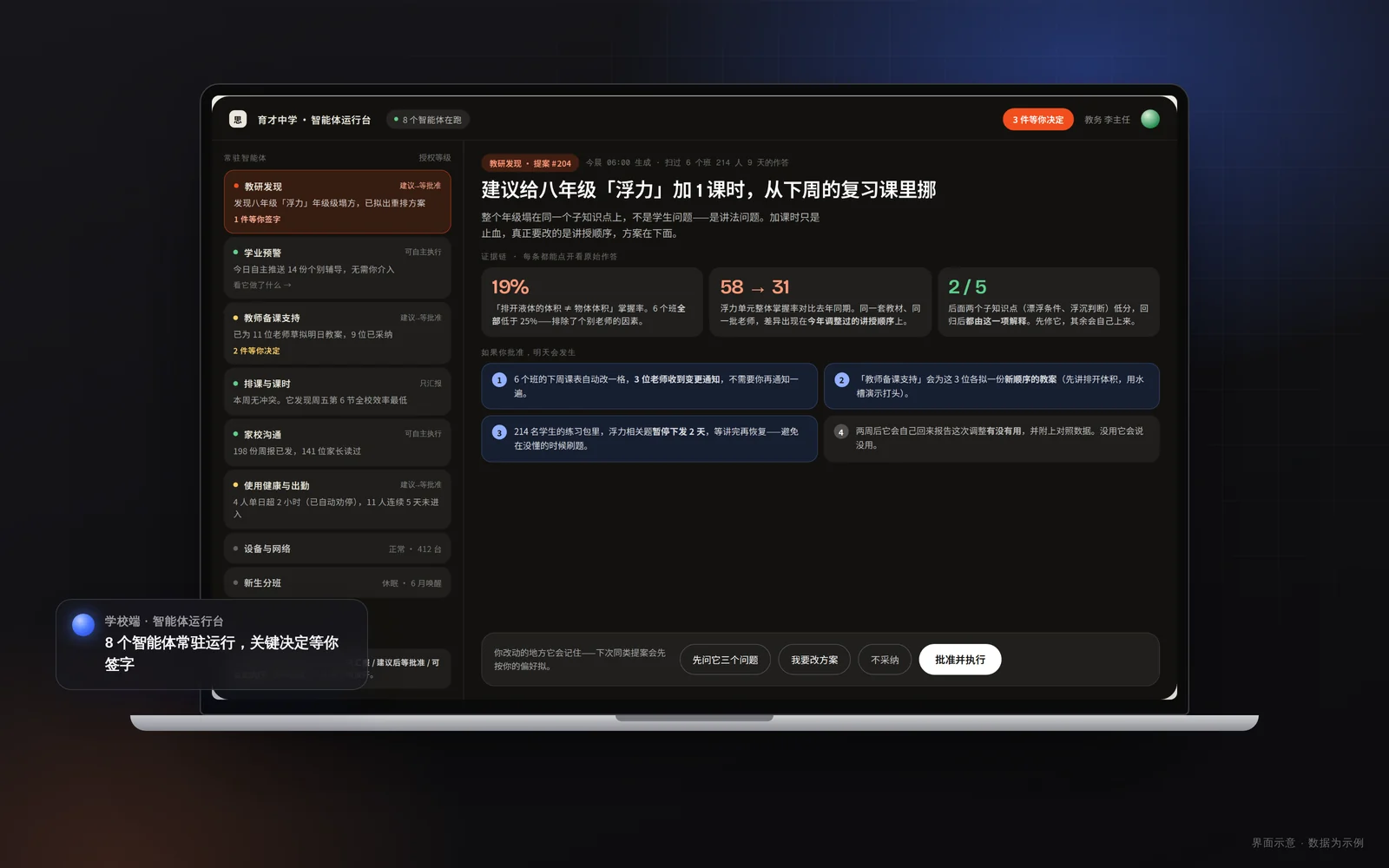
Third, the teacher’s final say. Lesson plans, assignments, and grading suggestions drafted by AI require teacher confirmation before reaching students, and the school console can configure how strongly AI intervenes, audit its behaviour, and roll features out gradually. That AI is technically able to act on its own is not an educational argument that it should.
None of the three answer whether the AI is any good. They answer a different question: once a school hands part of its teaching to a system, can that still be explained, held accountable, and stopped.