Article
Wanting to know how your child is doing is entirely legitimate. But the two usual ways of finding out each cost something: reading through every exchange between your child and an AI tells them they are being watched, while a single score cannot say what happened behind it.
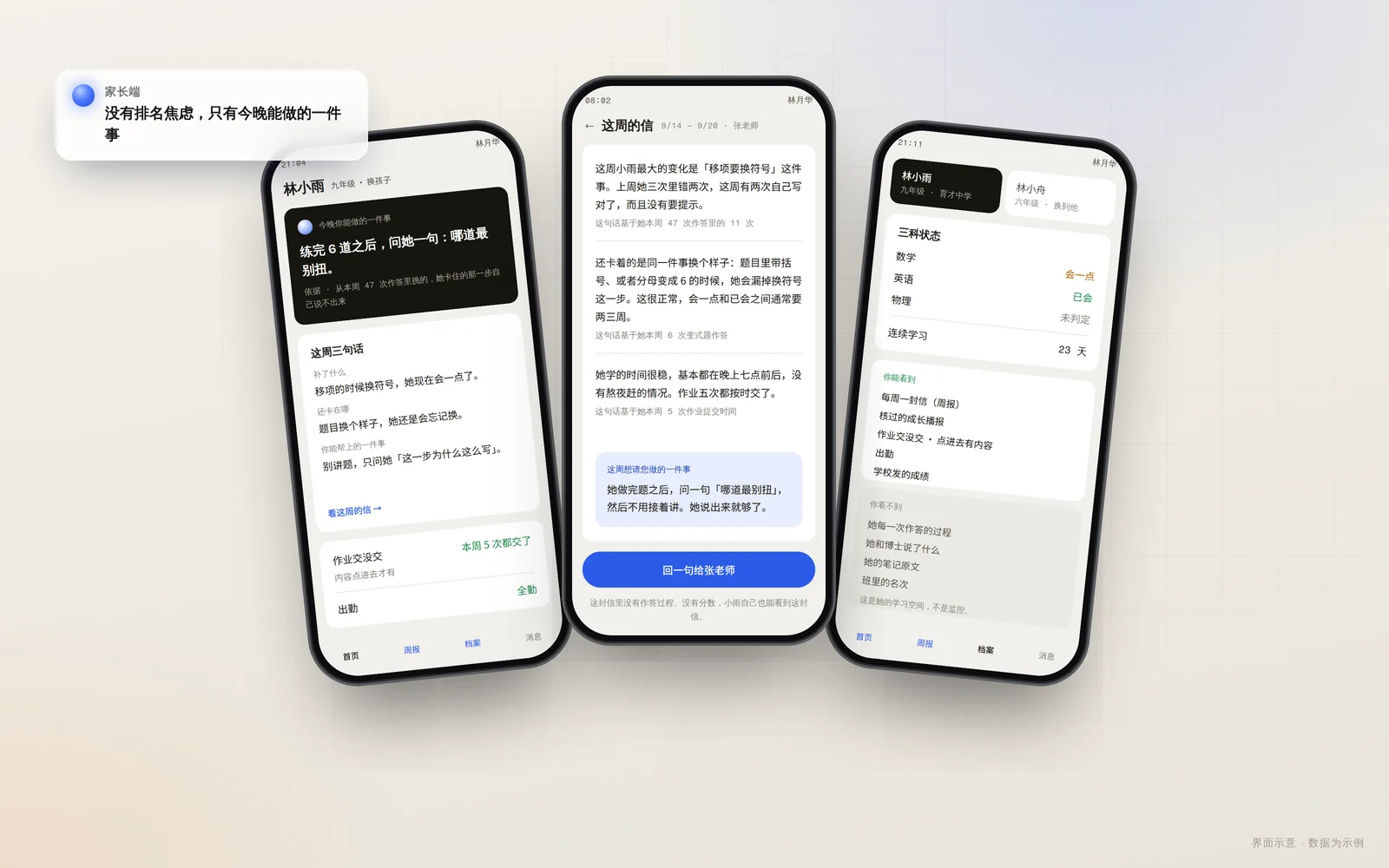
The parent side of Think EDU is built on role-safe projection: parents see a growth summary generated from learning evidence — what their child has been exploring, how their understanding has shifted, where they may need support — rather than raw transcripts.
That boundary is not about keeping parents in the dark; it protects a child’s sense that the learning is theirs. A child who knows every sentence will be relayed home starts saying only safe things — to the AI as well.
Meanwhile, parents and teachers are looking at different views of one shared chain of evidence. When the two sides talk about a child, they start from the same facts instead of separate impressions.